Corrugated Board Materials Guide – A/B/C (and E) Flute Differences
Understand corrugated packaging materials | Backed by 50 years of expertise from Taihe Paper Products, we help you choose the right board for your products
Corrugated board is one of the most widely used packaging materials today. It’s lightweight yet strong, provides excellent cushioning, and is recyclable. Jiaxin Box is a professional corrugated carton manufacturer under Taihe Paper Products. Established in 2007, we carry forward packaging expertise built since 1974. This page explains the specifications and use cases of A, B, C, and E flute types to help you select the most suitable corrugated box material for your products.
Corrugated Board Structure – How Liners and Fluting Work Together
Corrugated board is the core material of most shipping cartons. Its layered structure makes it both lightweight and strong. Understanding the basics helps you make more accurate packaging decisions, because liner grades and basis weight combinations directly affect print appearance, stacking strength, and product protection. To learn how corrugated board is made from raw paper to finished cartons, see the full manufacturing process.
Liner Grades and Material Options
The liner is the outer paper layer of corrugated board and directly impacts appearance and print results. Common liner grades (from higher to lower) include K liner (virgin kraft; highest strength, natural color), T2 liner (semi-recycled; balanced performance), T liner (recycled; cost-effective), and C liner (economy grade; lowest cost). Choose based on printing requirements and budget.
How Fluting Provides Cushioning
The fluting medium is the wavy paper layer in the center. Its corrugated structure is the main source of cushioning and compression resistance. When force is applied, the wave shape distributes pressure more evenly to protect the contents. Flute height and pitch define the flute type (A, B, C, etc.), and each type provides a different balance of cushioning and rigidity.
Basis Weight and Strength
Paper basis weight is typically measured in GSM (grams per square meter), such as 120g, 150g, 175g, and 200g. Higher GSM generally means greater density and strength, but also higher weight and cost. For many domestic shipments, 150g liners can be sufficient; for export cartons or heavy-duty packaging, 175g+ kraft liners are often recommended to maintain protection during transit.
Three-layer corrugated board construction
A/B/C/E Flute Comparison – Features and Best Uses
Corrugated board is categorized by flute height and density. The four most common flute types are A, B, C, and E. Each type has distinct physical characteristics, making it better suited for specific packaging goals. Below is a practical comparison to help you choose. You can also explore real-world applications in our applications gallery.

Flute thickness and profile comparison
A Flute (A-Flute) — Best Cushioning
A flute is about 4.8mm thick with roughly 108 flutes per meter. It offers the strongest cushioning among the four types. The taller wave structure absorbs external impact effectively and provides strong stacking resistance. Ideal for fragile items such as electronics, glass, ceramics, and precision instruments. The trade-off is greater thickness and slightly less surface smoothness for printing.
B Flute (B-Flute) — Best for Printing
B flute is about 3.2mm thick with roughly 154 flutes per meter. Its higher flute density creates a flatter surface, making it a top choice for high-quality printing. Commonly used for food packaging, gift boxes, color-printed cartons, and retail display packaging. It also saves storage space, but cushioning is slightly lower than A and C flute.
C Flute (C-Flute) — Most Common All-Rounder
C flute is about 4.0mm thick with roughly 128 flutes per meter. It’s the most widely used standard flute worldwide. C flute offers an excellent balance of cushioning, compression strength, and cost, making it a strong value choice for general packaging, shipping cartons, and export packaging across many industries.
E Flute (E-Flute) — Ultra-Thin Premium Packaging
E flute is about 1.6mm thick with roughly 295 flutes per meter, making it the thinnest among the four types. Its very high flute density provides an extremely smooth surface for refined printing. Great for cosmetics packaging, premium gift boxes, phone accessory boxes, and small e-commerce items. It looks sleek and saves storage space, but it has lower strength and is not recommended for heavy loads.
Strength & Quality Tests – Data-Driven Protection
Corrugated board quality depends not only on flute choice, but also on standardized strength testing that validates protective performance. Jiaxin Box follows international testing standards to ensure every batch of board delivers reliable protection during shipping and storage. Understanding the following four test indicators helps you evaluate packaging performance more precisely. For more details, see our ISO quality certification.

Professional quality testing equipment
Burst Strength Test
Measured in kgf/cm², it indicates how well the board resists puncture under pressure, simulating squeezing and impacts during shipping. Higher values generally mean stronger impact resistance and are often used to evaluate baseline protection for domestic shipping cartons.
Edge Crush Test (ECT)
Measured in kgf/cm, it evaluates resistance to vertical compression and directly affects stacking strength. ECT values are a key input for determining safe warehouse stacking height.
Puncture Resistance Test
Measures resistance to piercing by sharp objects—especially important for products with corners or protruding parts. Higher puncture resistance reduces the risk of the carton being pierced during transport.
Ring Crush Test (RCT)
Measures ring compression strength of the base paper and is a foundational indicator of paper quality. Higher RCT values generally mean a tighter fiber structure and stronger raw material performance.
Jiaxin Box Quality Control Standards
Jiaxin Box is certified under the ISO 9001 quality management system. We perform strict basis-weight inspections and strength sampling for each incoming batch of liners and fluting medium to ensure stable, consistent board quality. We also hold ISO900-1200 and ISO9001-2000 quality management system certifications, using systematic QC procedures to safeguard the reliability of every sheet of board.
Single-Wall vs Double-Wall Board – Strength Through Layering
In addition to flute types, corrugated board can also be categorized by the number of flute layers: single-wall, double-wall, and triple-wall. More layers generally mean greater thickness and higher strength, suitable for heavier-duty packaging needs. Understanding these structural differences is a key step in selecting the right solution. For more carton options, browse our full product catalog.
Single-Wall (3-Ply) — Lightweight Packaging
Made of one fluting layer bonded between two liners, with overall thickness roughly 2–6mm depending on flute type. Single-wall board is lightweight and cost-effective, suitable for general products and domestic shipping under 20 kg. Common choices include C flute (all-round) and B flute (print-friendly), widely used by many businesses.
Double-Wall (5-Ply) — Mid-to-Heavy Duty
Made of two fluting layers and three liners, typically about 7–9mm thick. Double-wall board significantly improves compression strength and cushioning compared to single-wall, suitable for products around 20–50 kg. Common combinations include AB (A’s cushioning + B’s print surface) and BC (balanced strength and cost), ideal for export cartons and precision products.
Triple-Wall (7-Ply) — Extra Heavy-Duty Export
Made of three fluting layers and four liners, with thickness up to around 12–15mm. This is the highest-strength corrugated board structure and can often replace wooden crates. Suitable for very heavy items over 50 kg, large machine parts, or ocean export packaging. While it costs more, it is far lighter than wood and easier to recycle.
Common Combinations and Recommendations
Double-wall board can combine different flute types to leverage complementary strengths. AB (A+B) offers excellent cushioning while maintaining a good print surface. BC (B+C) balances strength and cost. AC (A+C) provides the highest cushioning and stacking strength. Jiaxin Box can recommend the best combination based on your product weight, size, and shipping conditions.
Board layering by wall type
How to Choose the Right Corrugated Material – Practical Guide
With multiple flute types and board specifications available, selecting the right material can feel confusing. The following guidance covers practical dimensions that help you quickly narrow down the best option. If you’d like more personalized recommendations, explore our customization services and let our team plan a solution for your needs.
Choose by Product Weight
Product weight is often the primary factor. For lightweight items (under 5 kg), E or B flute single-wall can balance lightness and appearance. For mid-weight items (5–20 kg), C flute single-wall is a strong value choice. For heavier items (20–50 kg), AB or BC double-wall significantly increases compression strength. For very heavy items (over 50 kg), triple-wall board is recommended to ensure safe transport.
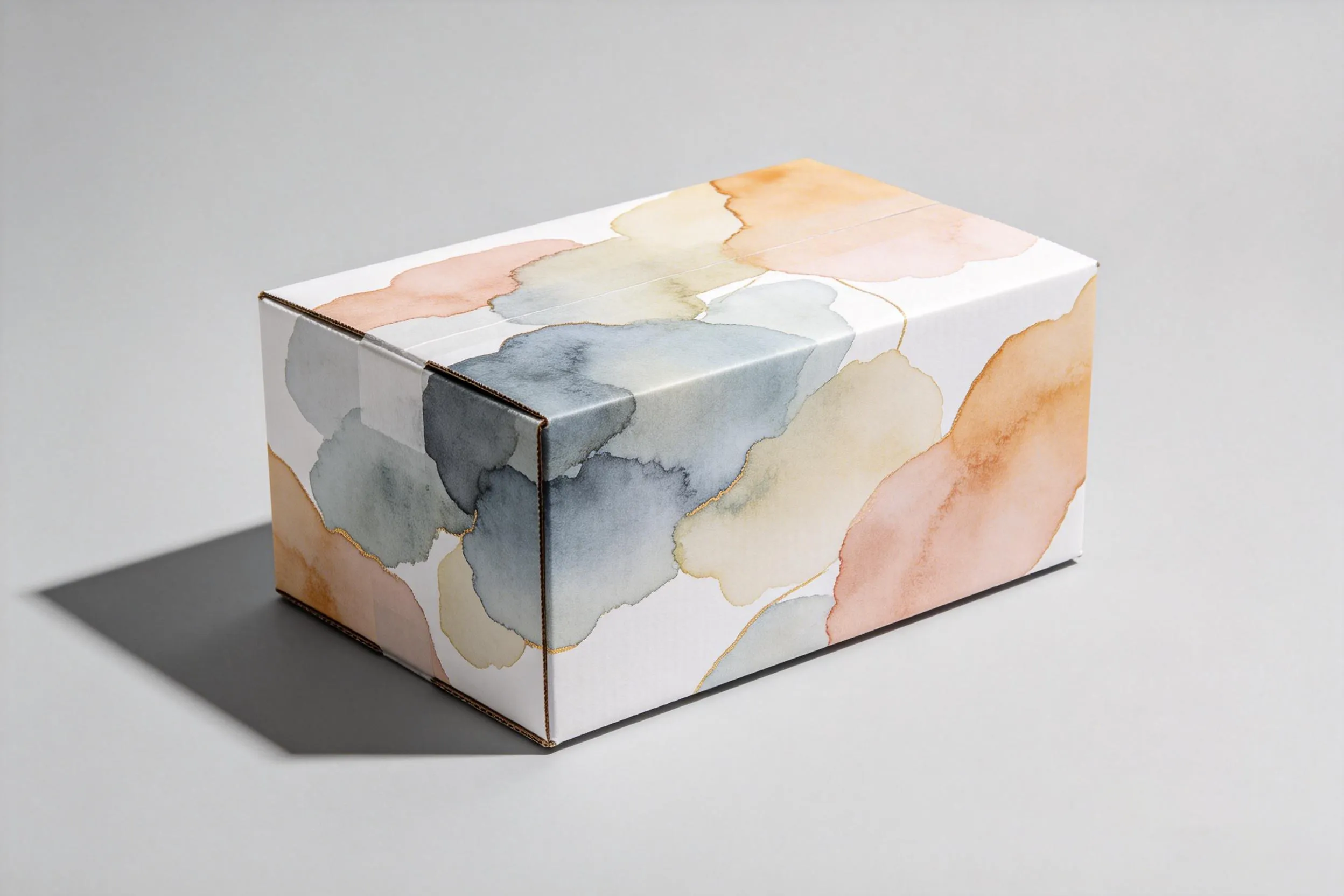
Flute recommendations by weight
Choose by Shipping Method
Shipping conditions directly affect the stresses your cartons face. For domestic delivery, C flute single-wall is often sufficient for standard handling. For air freight exports, B or E flute can help reduce weight and shipping costs. For ocean freight exports, consider humidity and long stacking duration—double-wall or above is recommended, along with kraft liners to improve moisture resistance and help cargo arrive safely.
Material recommendations for export
Choose by Packaging Purpose
Purpose determines priorities. If shipping protection is the main goal, choose A or C flute for strength. If the carton also serves retail display, choose B or E flute for a smoother print surface. For premium gift boxes, E flute paired with high-basis-weight white liners helps deliver a refined brand presentation.
Jiaxin Box Professional Recommendations
Material selection affects both packaging performance and total cost. With decades of material application experience from Taihe Paper Products, Jiaxin Box can recommend the most cost-effective option based on product characteristics, shipment volume, and budget. Our team provides free materials consultation and checks every detail to reduce trial-and-error.
Jiaxin Box Advantages & Sustainability Commitment
Choosing corrugated materials isn’t only about specs and price—it also depends on the supplier’s expertise and quality assurance. As a specialized manufacturer under Taihe Paper Products, Jiaxin Box offers strengths in material quality, sustainability, and service. Learn more in our sustainability commitment.
50 Years of Experience + ISO 9001
Jiaxin Box carries forward Taihe Paper Products’ manufacturing expertise since 1974 and operates under an ISO 9001 quality management system. We inspect basis weight and test strength for each batch of board materials. From incoming paper to outbound cartons, every production step is controlled by clear QC standards.
Recyclable Corrugated Materials
We use corrugated paper materials that can be recycled after use. By supporting circular material use, we help reduce packaging impact and strengthen your brand’s sustainability and social responsibility.
Water-Based Ink for Lower Impact
We use water-based ink to significantly reduce organic solvent usage compared with traditional oil-based inks, lowering VOC emissions. Water-based printing also improves de-inking efficiency during recycling, helping enhance recycled paper quality.
Free Professional Materials Consultation
Our team recommends the most suitable flute type and board combination based on your product specs, weight, shipping method, and budget. From selection to sampling confirmation, you get dedicated support that reduces trial-and-error.
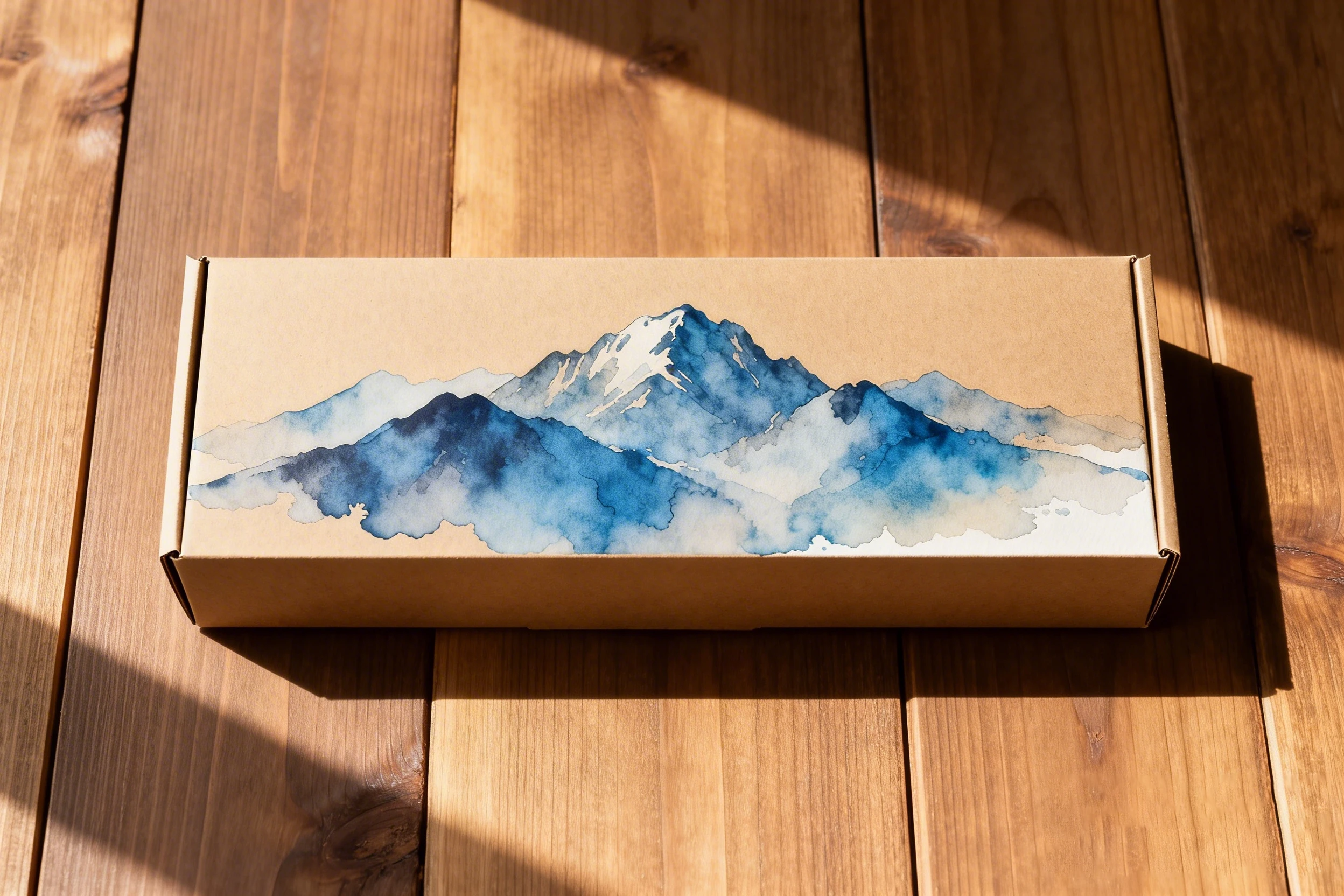
Eco-friendly packaging materials
Corrugated Board FAQs
Quick answers to common questions
-
A flute (≈5mm) offers the best cushioning and is ideal for fragile items like electronics and glass. B flute (≈3mm) has a flatter surface for high-quality printing and retail boxes. C flute (≈4mm) is the most common all-purpose standard, balancing strength and cost for general shipping and export. Consider weight, shipping, and printing needs—Jiaxin Box can recommend the best flute for your product.
-
E flute is an ultra-thin flute (≈1.5mm) with a very smooth surface for premium printing. It’s ideal for lightweight products that need a refined appearance, such as cosmetics, gift boxes, phone accessory boxes, and small e-commerce items. Because it has lower compression strength, consider inserts or dividers for added protection. Best for products under 5 kg.
-
Choose based on three factors: (1) product weight (lightweight: E/B single wall; mid-weight: C single wall; heavier items: AB double wall), (2) shipping method (domestic shipping: C is often sufficient; ocean export: double wall or above is recommended), and (3) packaging purpose (brand display: B/E for print quality; shipping protection: A/C for strength). For tailored advice, request an online quote and we’ll recommend the best option.
-
Single-wall board (3-ply) has one fluting layer and two liners, suitable for lightweight products and basic protection. Double-wall board (5-ply) has two fluting layers and three liners, significantly improving compression and cushioning for mid-to-heavy items and export packaging. Common combinations include AB (cushioning + print surface) and BC (good protection with cost efficiency). For very heavy-duty needs, triple-wall (7-ply) can be used.
-
Yes. We use corrugated paper materials that are recyclable, and our cartons can be recycled after use. We also use water-based ink to reduce organic solvent usage and lower environmental impact. Carrying forward Taihe Paper Products’ sustainability mindset, Jiaxin Box supports greener packaging so your products stay protected while being kinder to the planet.
Let Jiaxin Box Recommend the Best Packaging Material
Backed by 50 years of manufacturing expertise: free consultation and tailored flute recommendations
Get Consultation